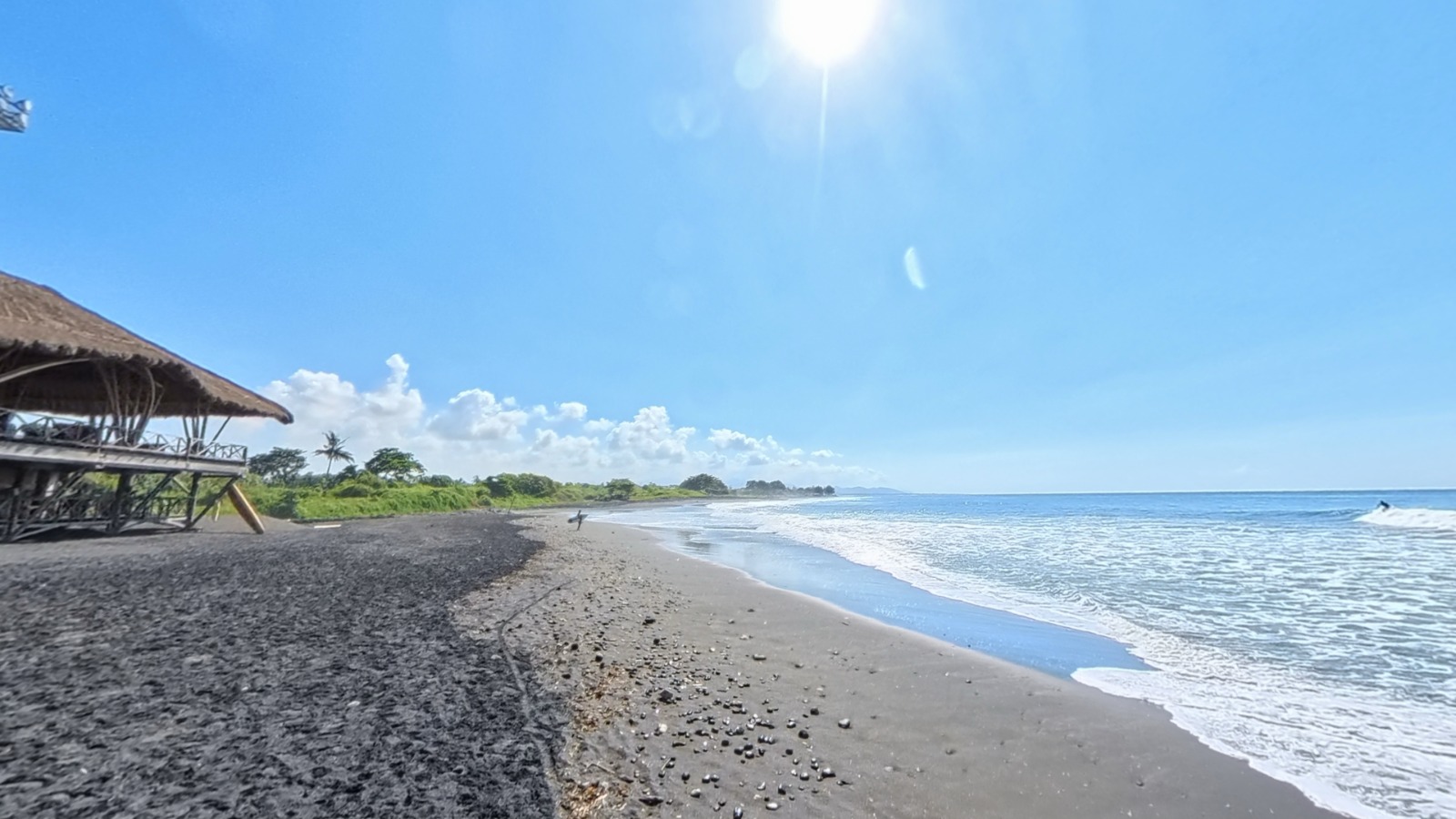
The social moment is pervasive: a full gallop, reins in one hand, sea spray and sun, no helmet, no cares as the long stretch of empty beach-side sand and crashing sea flashes by. The image is a gold-mine for tour operators, with beach riding sold as pure, wild, and enchanting fun. Yet talk to the guides and operators who offer coastal trail rides for a living, and a very different story is told. The beach is one of the most deceptive environments you can ride. Between shifting tides, broadside waves, glaring reflective sunshine, sand that is suddenly deep, and tidal runoffs cutting across your path, your dream ride can quickly turn challenging. The reality: a good coastal ride isn’t about letting go — it’s about paying closer attention.
The Romance vs. the Truth
On Instagram, the shoreline looks like a flat, open racetrack where nothing can go wrong. The truth on the ground is a working, unpredictable landscape.
When you ride out onto a coast—whether along the volcanic sand of Bali, the islands of Thailand, or anywhere else—you are sharing that space with breaking swells, local fishing boats, village dogs, and families out walking. More than that, you are sitting on an animal that perceives the beach very differently than you do. The wind drowns out your voice, the sound of the crashing surf builds excitement, and that vast open horizon triggers an ancient instinct in horses to run.
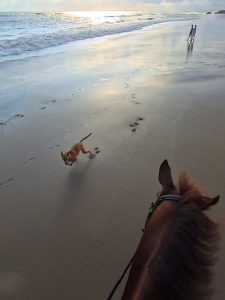
When passing local fishermen working in the surf, families on the shore, or the frontage of a beachfront resort, a thoughtful rider drops smoothly to a walk. Slowing down is basic courtesy to the community whose workspace you are crossing, but it is also essential safety: it gives your mount the mental bandwidth to absorb sudden distractions—like a loose dog or a tumbling beach umbrella—without spooking at speed.
When an operator promises ‘fast beach gallops for absolute beginners with zero experience,’ that’s your cue to pause. In open coastal air, horses feed on each other’s energy. If one speeds up, the rest want to follow. Without a solid, independent seat and an established connection through the reins, what was supposed to be a scenic holiday canter can quickly turn into a passenger ride you can’t steer.
Why Horses Trip: What the Ground is Doing Beneath You
Ask any seasoned guide why beach rides have more sudden stumbles than woodland trails, and they won’t blame clumsy horses. They’ll point straight at the sand.
Most of us assume wet sand is as solid as an arena floor. But sand soaked with ocean water is alive and moving. When a horse strikes wet sand at a canter, the impact pushing down forces water up between the tightly packed sand grains. For a split second, the solid wet-sand patch turns from firm to thick liquid. A horse that felt sound underfoot on one stride suddenly punches inches deeper on the next. The front leg sinks, the shoulder dips, and the horse stumbles over its own stride.
There’s another strange quirk of wet coastal sand: suction. When a hoof drives into wet, fine silt, lifting it creates a momentary vacuum seal. The hoof takes just a fraction of a second longer to leave the ground, and because the horse’s large frame is still moving forward in a canter, that delayed step acts like an invisible tripwire, causing a sudden knee buckle.
And then there is the rider. We often make this harder on our horses without even realizing it. When riding in open country, it’s quite natural to lean forward into a light seat. But when your weight tips onto the withers, you put nearly three-quarters of your combined weight onto the horse’s front legs. The unevenness of load compounds the impact of the horse hitting a soft pocket of sand or a suction patch: the horse has no balance left in reserve to catch itself. Keeping your upper body tall, your seat grounded, and your weight distributed back helps the horse recover cleanly whenever the footing shifts.
“A horse has incredible forward power, but almost zero lateral balance against moving water. Catching a wave sideways doesn’t just splash—it unbalances legs.”
Riding the Surf: Why Swell Direction Matters
Wading through surf looks effortless on camera, but ocean water doesn’t behave like a gentle river. A river flows in one direction; ocean waves hit with lateral force, lift, and then retreat with a strong undertow.
One of the most important habits a beach guide teaches you is never to let a breaking wave catch your horse broadside. A horse’s legs are built to carry weight forward and back; they have very little strength against sideways pressure. When a rolling knee-high wave hits a horse from the side, the water pushes against the legs while simultaneously washing the sand out from under the hooves. With a rider sitting up top, that sideways impact can easily buckle the horse’s knees and knock both of you off balance into the foam.
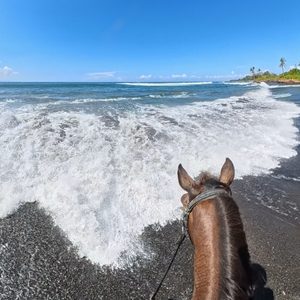
The simple rule in the surf is to meet the water squarely:
- Turn toward the wave: When an incoming swell approaches, turn your horse’s shoulders straight into it. Meeting the water head-on lets the chest part the wave while keeping all four legs square and stable under the body.
- Angle with the retreat: As the wave breaks and rushes back out to sea, turn the horse smoothly away or angle diagonally with the water. Never let the retreating sea drag sideways across the back of the legs—that pulling feeling as the sand slides away beneath them can startle even a calm horse into stepping backward blindly.
The Rivulet Reflex: Reading the Sand Ahead
Another surprise waiting on a beach canter is the tidal rivulet—the shallow drainage streams carved across the sand as the tide recedes.
From the saddle at a canter, a 3- or 4-foot-wide stream looks like a flat puddle. But to a horse’s eyes, moving water cutting through sand can look like a bottomless trench. They cannot tell if it is two inches deep or a sudden drop-off. When horses approach a stream of water at speed, they typically react in one of two ways:
1. The sudden anchor: The horse drops its head, sits back on its hocks, and slides to a dead stop from a canter. If you are leaning forward with loose reins, momentum will send you straight over the shoulder.
2. The unannounced jump: The horse coils and launches over the rivulet as if it’s a cross-country ditch. If you aren’t expecting it, the sudden upward thrust leaves you behind, coming down hard on the saddle or losing a stirrup.
The fix is simple: look ahead. An attentive rider reads the beach fifty yards out. When you spot a water channel or a dark drainage cut, bring your horse back to a balanced trot or a steady walk. Let the horse lower its nose, check the depth, and step calmly across on a light rein before asking for a canter again.
Optical Vertigo: Why Horses Freeze in Foaming Water
If you’ve ever stood in retreating surf and felt like you were sliding backward, you’ve experienced what horses feel. Horses rely heavily on a stable horizon to balance. When a wide sheet of white foam rushes rapidly past their legs back out to sea, their eyes perceive the movement, but the shifting sand underfoot makes them feel like the earth itself is sliding away.
When this happens, a horse will often freeze, plant its front feet wide, drop its head to its knees, and shake its ears in confusion. Hitting or kicking a horse in this moment only adds panic to disorientation. The best response is quiet reassurance: keep your eyes fixed on a solid point on land—a headland or tree line—keep a gentle, supportive leg on, and quietly guide the horse’s head back toward dry ground until its balance resets.
The Camber Problem: Straight Lines on the Beach Aren’t Flat
Most beaches aren’t level; they slope toward the sea. Cantering a long, straight line parallel to the water means your horse is constantly traveling on a slant—the inside leg stepping higher than the outside leg.
Over a kilometer or two, that constant tilt puts uneven strain on joints and hocks and makes it easy for a horse to brush its own legs or clip a heel. Good guides won’t hold one endless straight canter along the slope; they’ll vary the path, incorporate walking breaks, and give horses time to travel squarely.
Why the Tide Table Comes First
A reputable coastal stable never schedules rides based on vacation breakfast hours or sunset photo preferences. They schedule strictly around the tide, the heat, the weather, and local conditions.
When the tide goes out, it leaves behind a wide strip of firm, packed wet sand. This is the only ground suitable for active work: it’s springy, clean, and supports the horse’s weight without giving much way. Up higher on the beach, the dry sand is deep, loose, and heavy. Working a horse in deep, dry sand at anything more than a walk is exhausting and strains tendons.
At high tide, that firm, packed strip is completely submerged. If an operator tells you they can run an active beach ride at peak high tide, they are either going to slog through heavy dry sand or squeeze between breaking waves and sea walls. An ethical stable checks the tide chart first: if low tide is at 6:30 AM, you ride at dawn. If low tide falls during a sun-blazed late afternoon, they ride inland trails instead.
The Real Magic of Coastal Riding
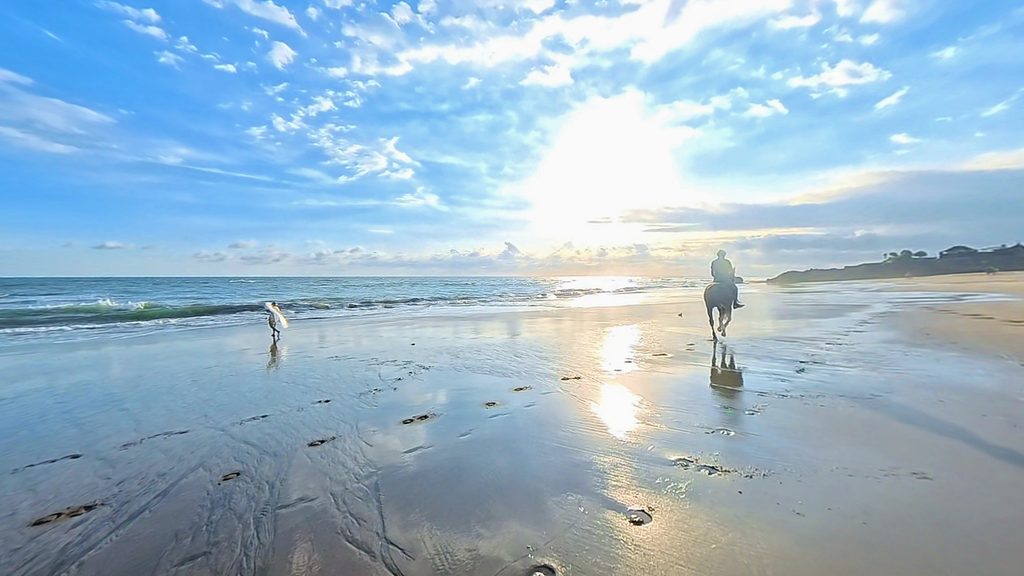
Riding along an ocean coast is one of the most memorable experiences equestrian travel offers—not because it has to be a reckless gallop, but because it asks you and your mount to ride in partnership with a powerful natural world.
When you understand how the tides shape the footing, how to guide a horse through the swell, and how to read the sand ahead, the ride becomes effortless and safe. You aren’t fighting the elements for a photograph; you are moving with the rhythm of the sea, riding with quiet confidence, and giving the horse the care and attention it deserves.